The Street Food Story of Tacos: From Mexico to Global Fusion in Brevard
- Gordingo's
- 07/16/2026

At its most basic, a taco is a tortilla wrapped around something delicious. But that simple idea carries centuries of food history, regional pride, street food culture, migration, and creativity. A taco can be humble or bold, quick and casual, or carefully layered with slow cooked meats, fresh salsa, herbs, and heat. That is part of what makes tacos so special. They are not just one recipe. They are a format for flavor.
Where Did Tacos Begin?
Tacos come from Mexico, but the exact origin of the modern taco is not as simple as naming one inventor. Long before the word taco became widely used, people across Mexico and Central America were already eating corn tortillas with fillings. The deeper story begins with maize, masa, and tortillas.
Corn has been central to Mexican food culture for thousands of years. One of the most important techniques behind traditional tortillas is nixtamalization, cooking maize in an alkaline solution so it can be ground into masa. This single technique links maize to Mexican and Central American cooking, and Mexico has dozens of native maize types with different culinary uses.
Traditional Mexican cuisine is so culturally significant that UNESCO recognizes it as part of the Intangible Cultural Heritage of Humanity, pointing to corn based foods such as everyday tortillas and tamales. So while no one can honestly say a single person invented the taco, it grew from a much older tradition: warm tortillas used as both food and utensil.
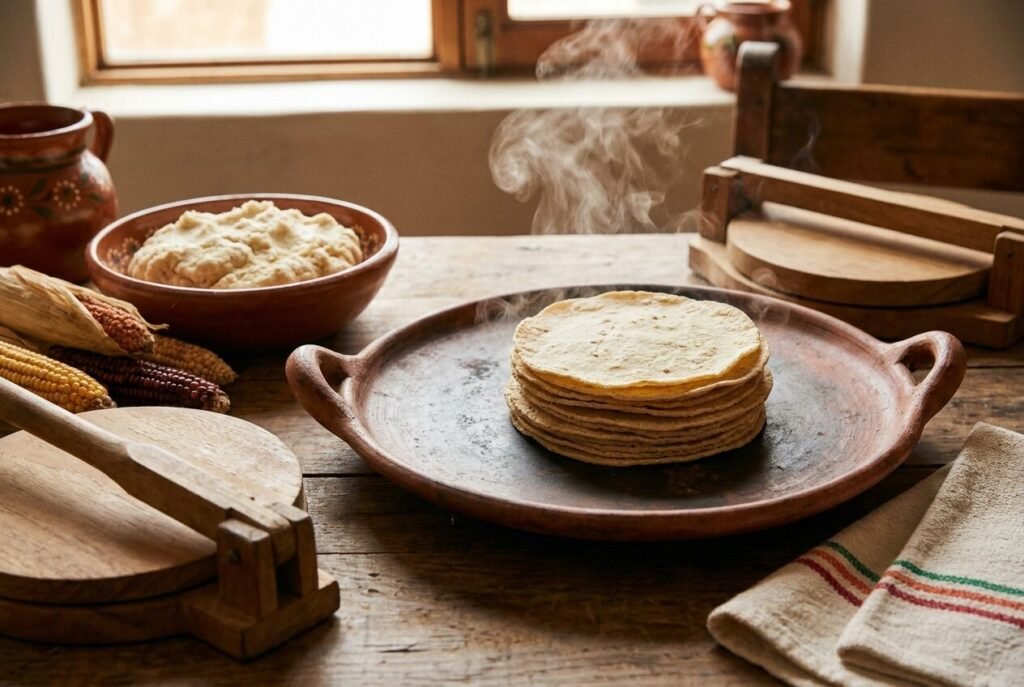
Nixtamalized corn, soft masa, and fresh tortillas: the foundation under every taco.
The Modern Taco and Mexican Street Food
Food historian Jeffrey M. Pilcher traced one strong theory about the modern taco to Mexican silver mines in the 18th century. In the mines, the word taco referred to the small paper wrapped charges used with gunpowder. Some of the earliest documented references to tacos as food appear later, toward the end of the 19th century, with one early style called tacos de minero, or miner’s tacos.
That history matters because it connects tacos to working people, street food, portability, and practical flavor. Tacos were never about fancy presentation. They were about food you could hold in your hand, eat quickly, and fill with whatever tasted good.
In Mexico City, taquerías became gathering places where regional cooking traditions came together. As people migrated into the city, they brought their local foods with them, creating a rich street food culture where you could taste flavors from many parts of Mexico in one place. That is still one of the great strengths of tacos today. A taco can carry a region, a family recipe, a cooking style, or a completely new idea.
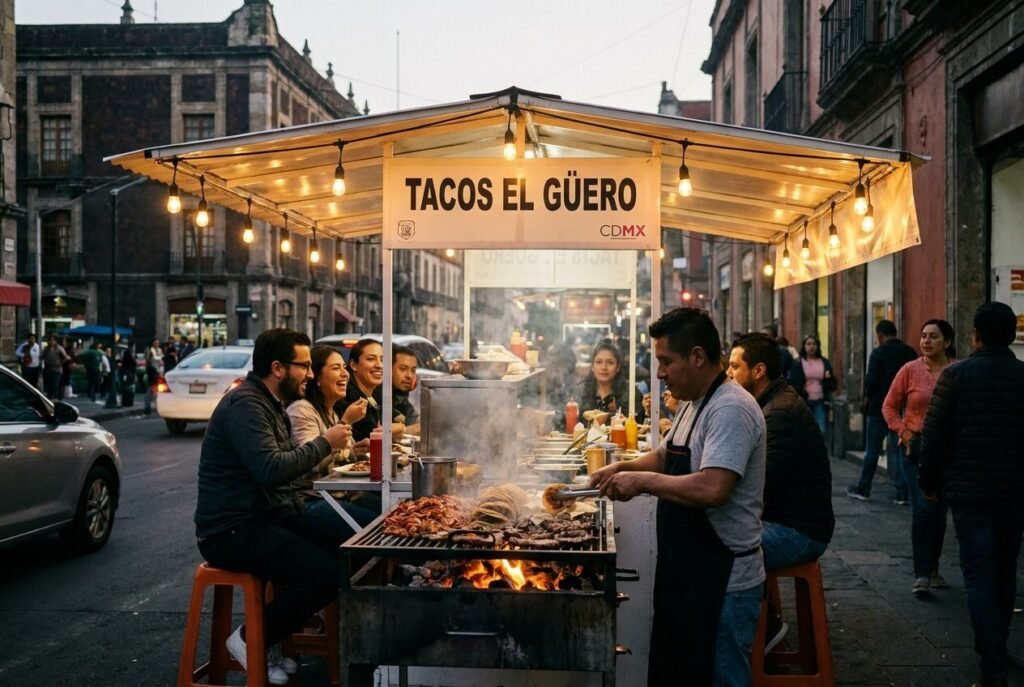
A Mexico City street taquería, where regional flavors meet after dark.
Why Tacos Became So Popular
Tacos became popular because they solve almost everything people want from food.
- Portable and easy to eat anywhere
- Affordable and unpretentious
- Endlessly easy to customize
- Casual without ever being boring
- A quick snack, a full meal, or a late night bite with friends
The Smithsonian Center for Folklife and Cultural Heritage describes the tortilla as something that can replace a fork and spoon, and it calls the taco a street food that acts as a cultural equalizer in Mexico. People from all walks of life gather around taquerías and food stands. That is a big part of the magic. Tacos are social food. They invite people to gather, compare flavors, add salsa, squeeze lime, try one more, and argue about which one was best.
The Flavor Structure of a Great Taco
A great taco works because it balances contrast. You get the warmth of the tortilla, the richness of the filling, and freshness from cilantro, onion, cabbage, pico, slaw, or pickled vegetables. You get brightness from lime, vinegar, or salsa, and heat from chiles. You may get crunch, creaminess, smoke, sweetness, or char. The tortilla holds it all together, but the contrast is what makes each bite exciting.
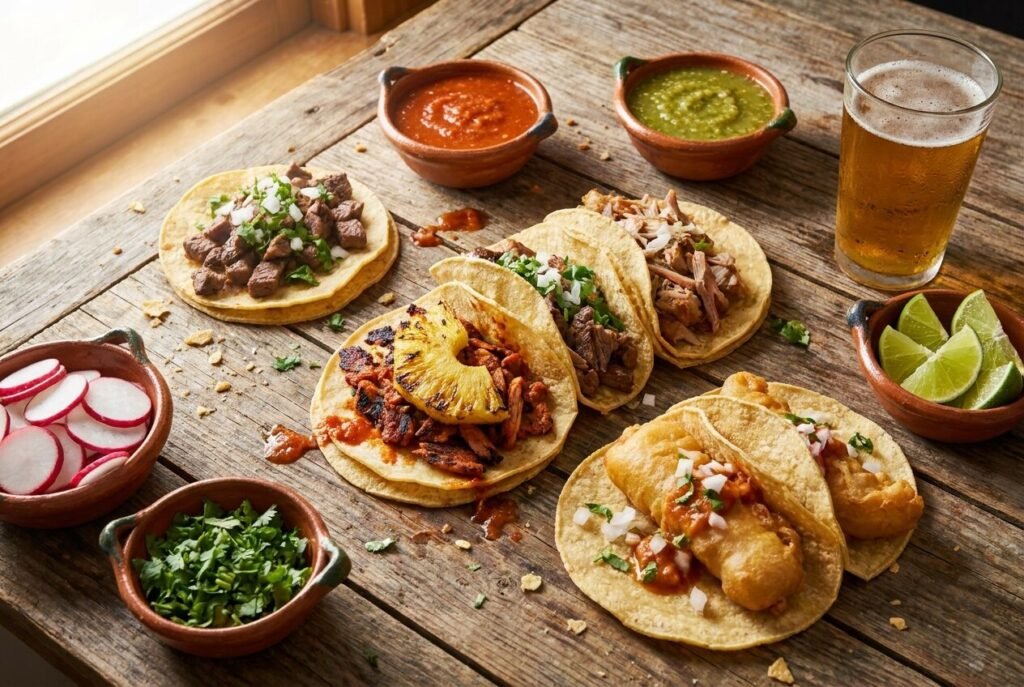
That is why tacos can handle so many different fillings. Grilled steak, slow cooked pork, crispy fish, roasted vegetables, braised beef, mushrooms, beans, shrimp, chicken, pork belly, pineapple, kimchi, barbecue, curry, or hot sauce can all work when the balance is right.
Warm tortilla, rich filling, fresh toppings, bright acid, and heat, all in one bite.
Favorite Kinds of Tacos
There are countless taco styles, but a few have become especially loved. Here are some of the classics worth knowing.
Carne Asada
Carne asada tacos are built around grilled beef, usually served simply with onion, cilantro, salsa, and lime. They are closely associated with northern Mexico and the borderlands, where grilled meat culture runs deep.
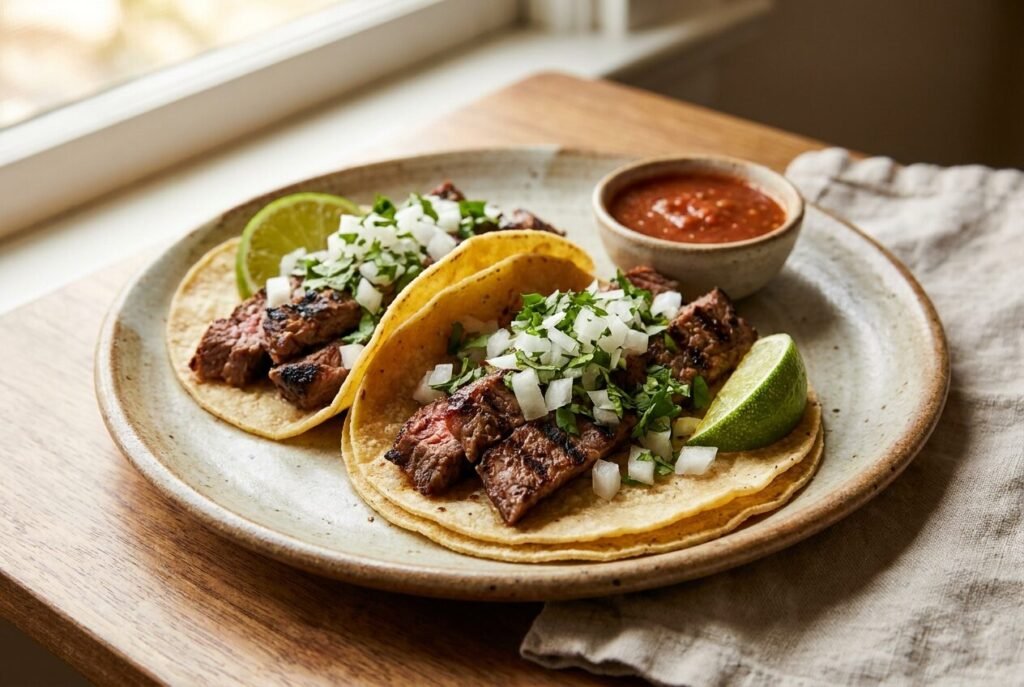
Carne asada: char grilled beef, onion, cilantro, and lime.
Carnitas
Carnitas tacos are made with pork cooked slowly until tender, then crisped around the edges. They are rich, savory, and often finished with onion, cilantro, salsa, and a squeeze of lime.
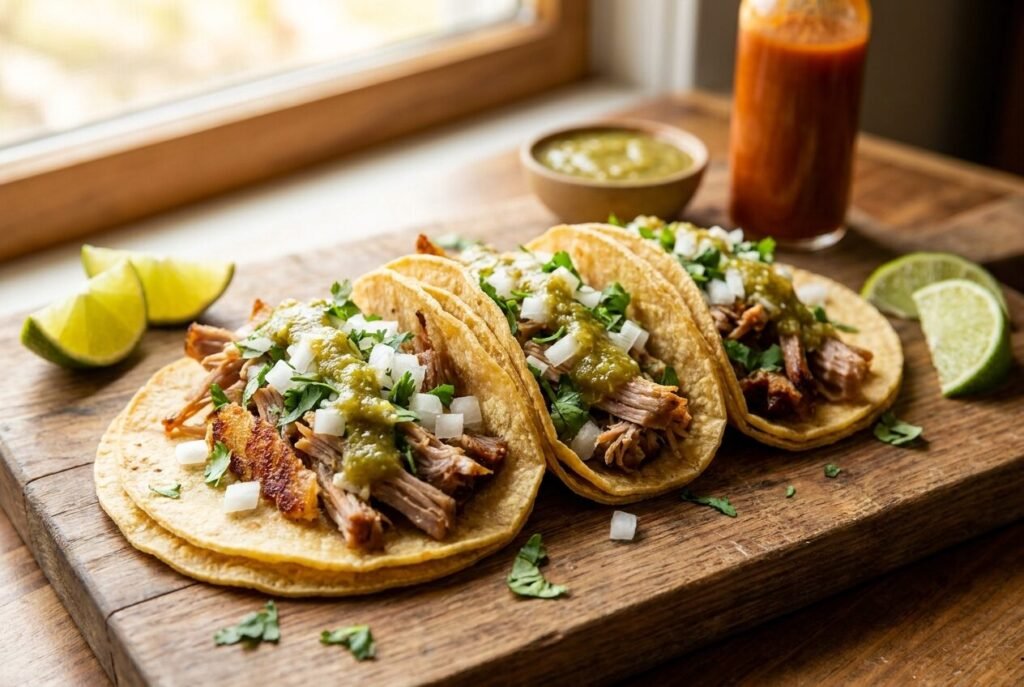
Carnitas: slow cooked pork with crispy edges and salsa verde.
Barbacoa
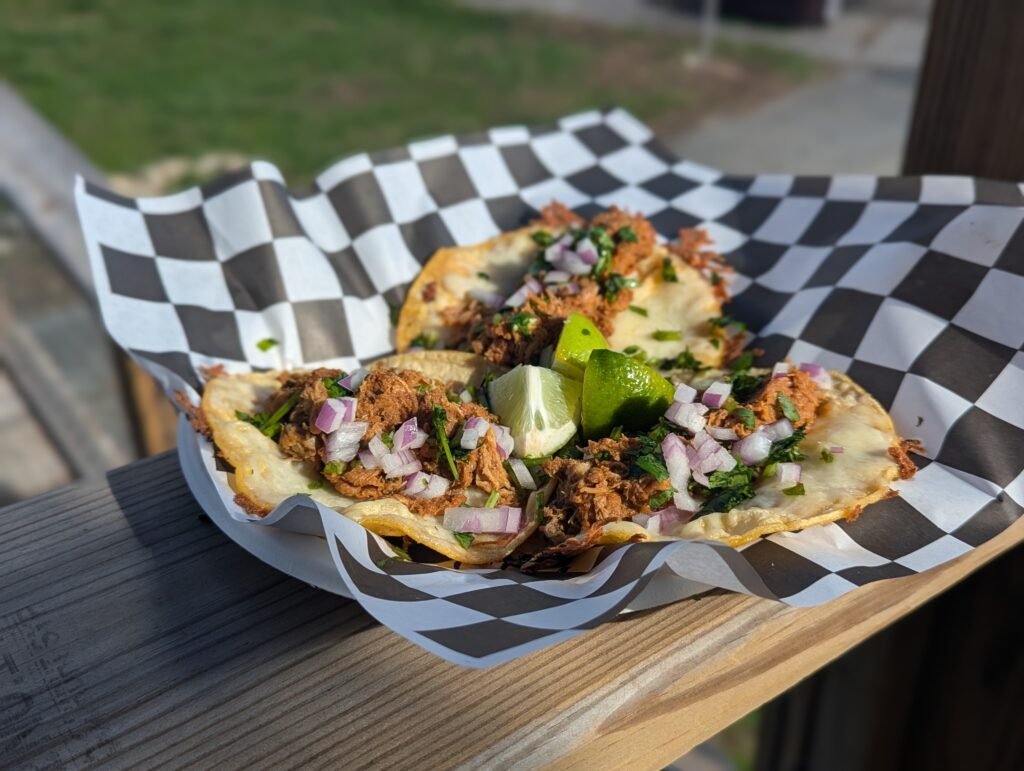
Barbacoa comes from slow cooked meat traditions tied to pit cooking and long, patient preparation. Depending on the region it may be made with lamb, goat, or beef, pulled tender and deeply seasoned.
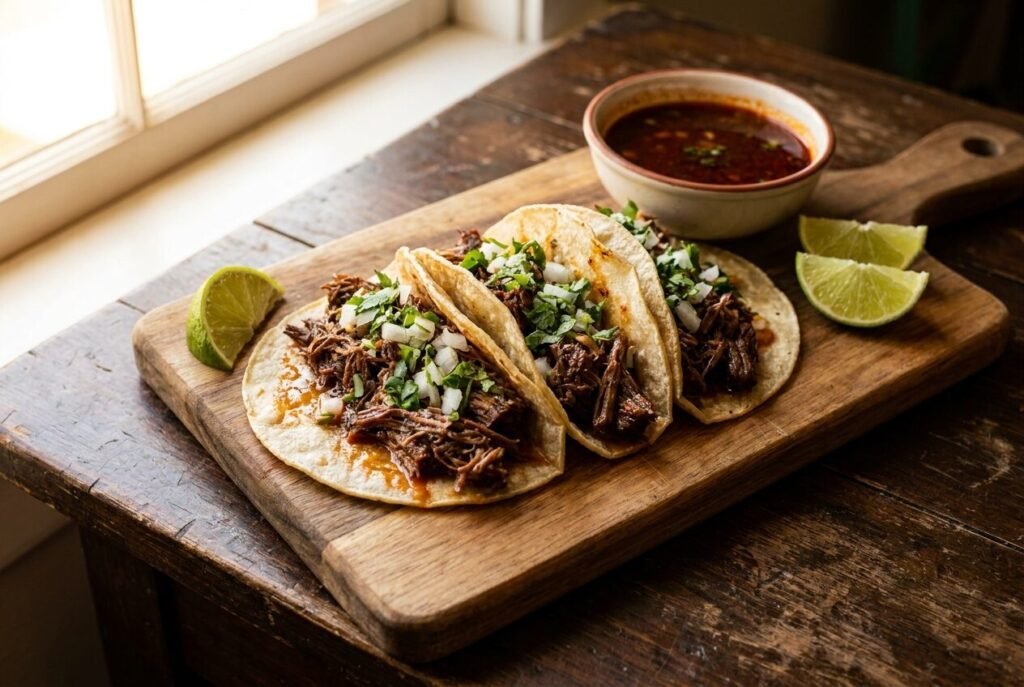
Barbacoa style tacos at Gordingo’s: tender, slow cooked, and loaded up.
Birria
Birria tacos have exploded in popularity, but birria itself has deep roots in Jalisco. It is a rich, flavorful stew traditionally made with goat, and also with beef, lamb, or chicken. Birria tacos are often served with the braising liquid, or consomé, for dipping. At Gordingo’s, that craze even became a weekly tradition: Birria Ramen Thursdays.
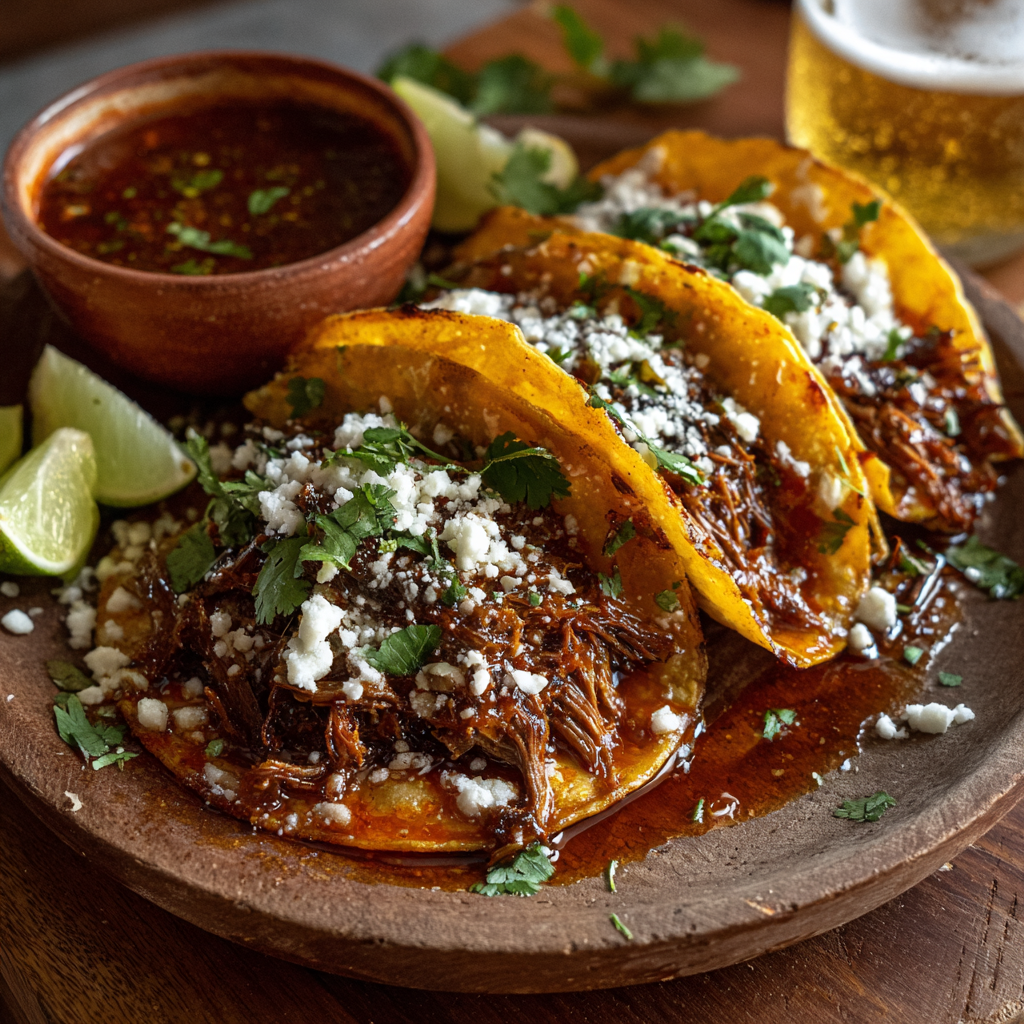
Birria tacos with a side of consomé for dipping.
Tacos al Pastor
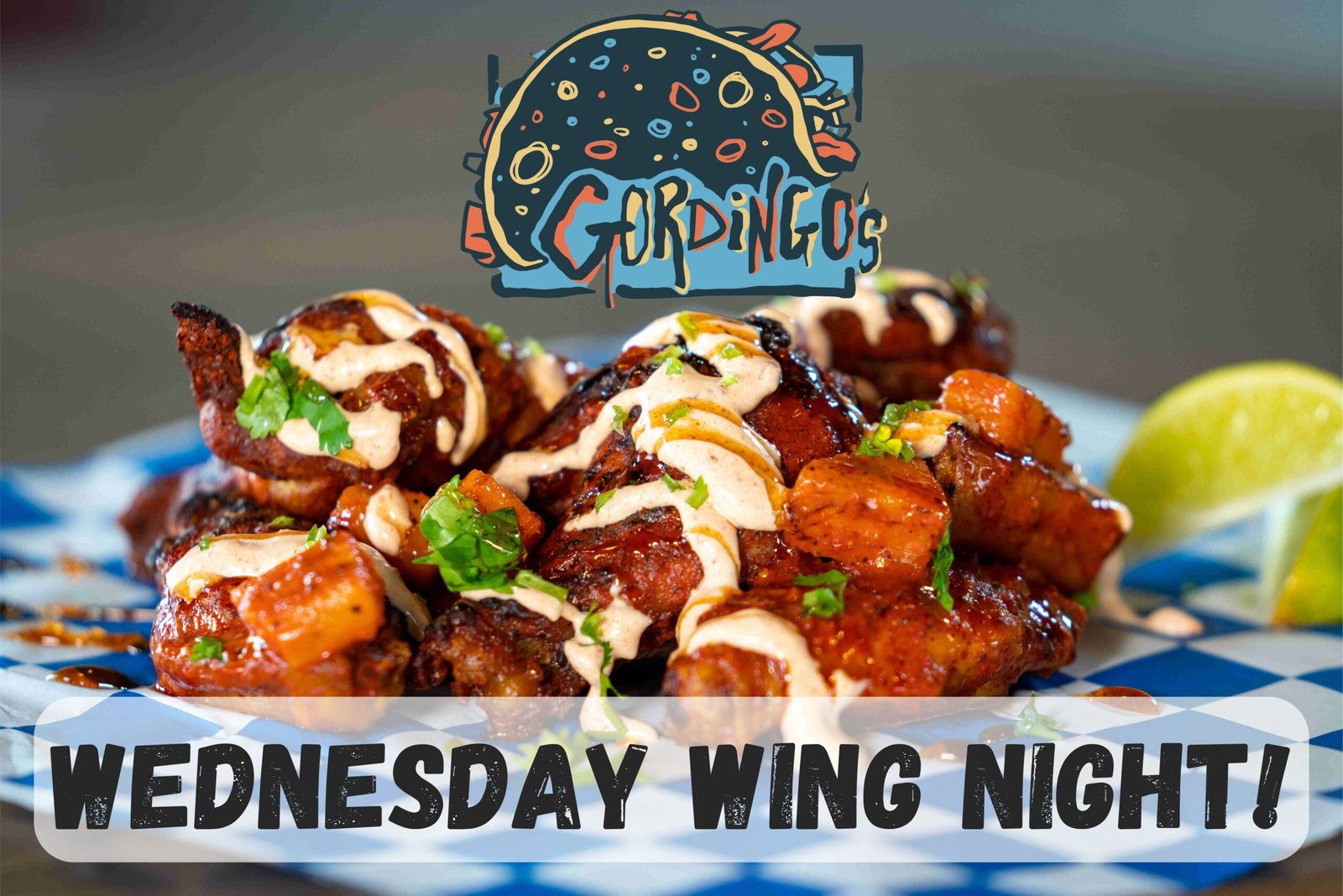
Al pastor is one of the clearest examples of global influence becoming Mexican street food. Lebanese immigrants brought shawarma style vertical spit cooking to Mexico, and Mexican cooks adapted the method with pork, chiles, spices, pineapple, and corn tortillas. The result is pork roasted on a vertical spit, a technique tied to shawarma brought to Puebla in the 1930s. That al pastor flavor runs deep at Gordingo’s, where it even shows up on our wings for Wednesday Wing Night.
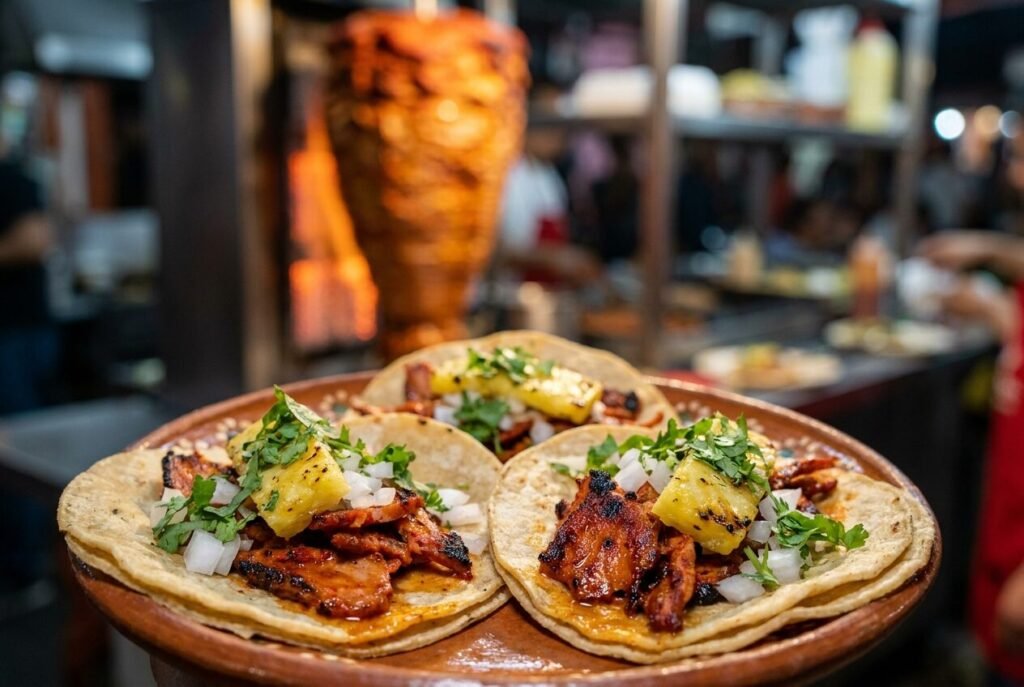
Tacos al pastor: spit roasted pork with grilled pineapple.
Baja Fish Tacos
Baja fish tacos bring the ocean into the story. The Baja style is battered and fried, typically served with cabbage, avocado, crema, and salsa. The style is often linked to Ensenada or San Felipe, both of which claim a place in the fish taco’s origin story.
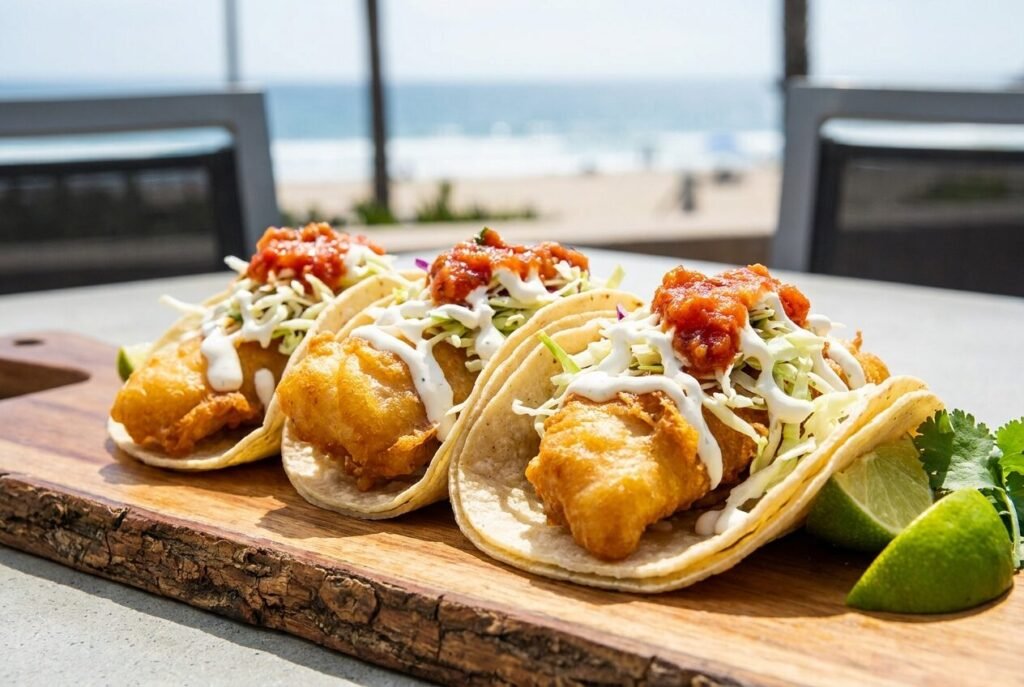
Baja fish tacos: crispy battered fish, crunchy slaw, and crema.
Tacos de Guisado
Tacos de guisado are filled with stews and home style dishes: potatoes with chorizo, chicken tinga, beans, rajas, picadillo, mushrooms, or slow simmered meats. They show how a taco can turn everyday cooking into street food.
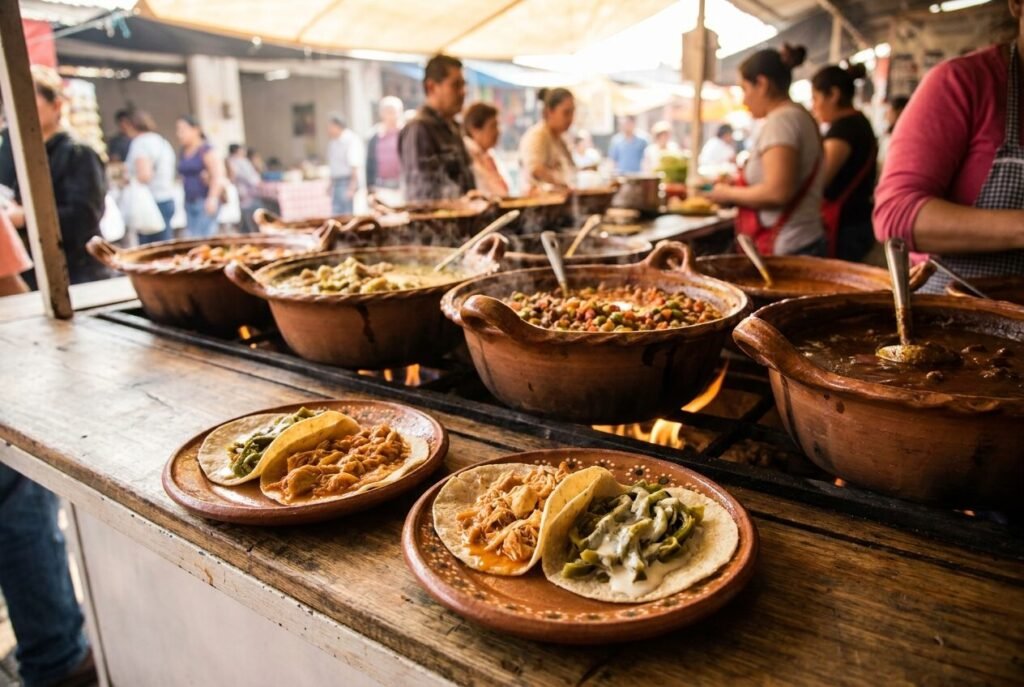
Guisado style: home cooked fillings like chicken tinga.
Vegetarian Tacos
Vegetarian tacos have always had a place at the table, especially when built around beans, mushrooms, squash, nopales, roasted peppers, potatoes, avocado, cheese, or seasonal vegetables.
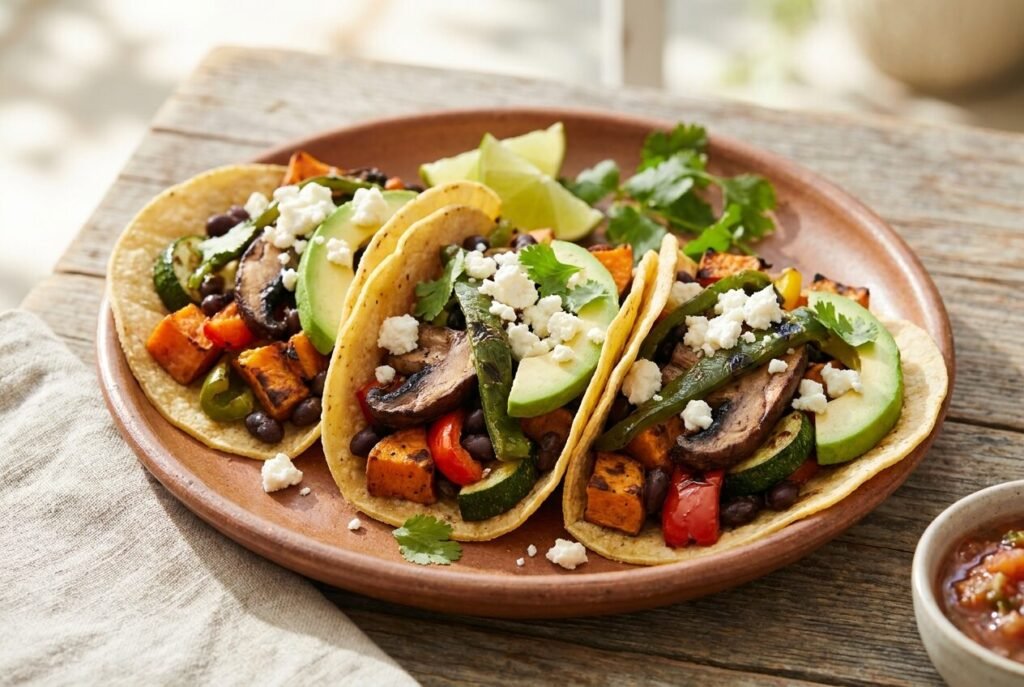
Vegetarian tacos: roasted vegetables, avocado, and queso fresco.
Tacos Around the World
One reason tacos travel so well is that they are open to interpretation. As Mexican food spread through migration, restaurants, food trucks, and street vendors, tacos kept adapting. Mexican American tacos developed around ingredients available in the United States, including ground beef, cheddar cheese, lettuce, and crunchy shells. Glen Bell did not invent the taco, but he helped commercialize a fast food version through franchising and the pre fried taco shell.
At the same time, more regional Mexican styles kept spreading across the country and around the world. People wanted carne asada, barbacoa, al pastor, birria, fish tacos, and other traditional street styles.
Fusion tacos also became a major part of modern taco culture. Korean Mexican tacos are one of the best known examples. Roy Choi and Kogi BBQ in Los Angeles helped jump start the modern K Mex taco movement in 2008, merging Korean barbecue, food truck culture, and tortillas. That is the beauty of tacos. They can honor tradition and still leave room for new ideas.
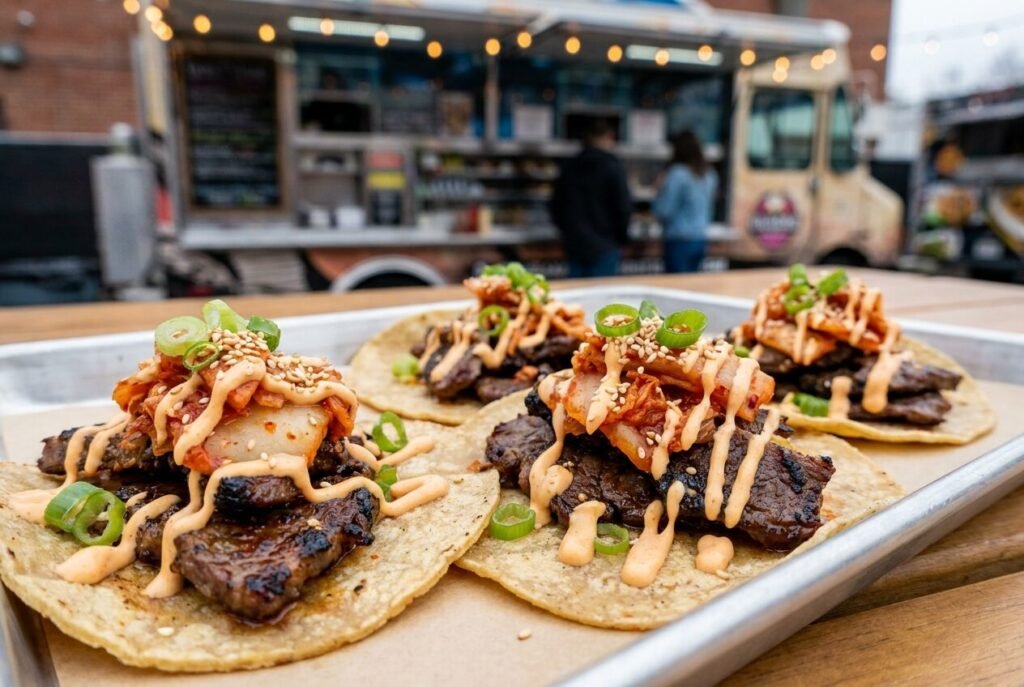
Korean-Mexican fusion tacos: bulgogi, kimchi, sesame, and sriracha crema.
What Makes Tacos So Special?
Tacos are special because they are both familiar and endlessly new. You already know how to eat one. Pick it up, fold it, add salsa, take a bite. But the flavor inside can come from almost anywhere: a Mexican street corner, a coastal fish stand, a backyard grill, a family kitchen, a barbecue pit, a brewery, a food truck, or a chef’s latest idea.
Tacos also have a way of making bold flavors feel approachable. Put a new sauce, spice blend, protein, or topping in taco form, and suddenly people are willing to try it. The tortilla makes the unfamiliar feel familiar. That is why tacos are one of the best foods for global fusion. They just need to be balanced, fresh, flavorful, and fun to eat.
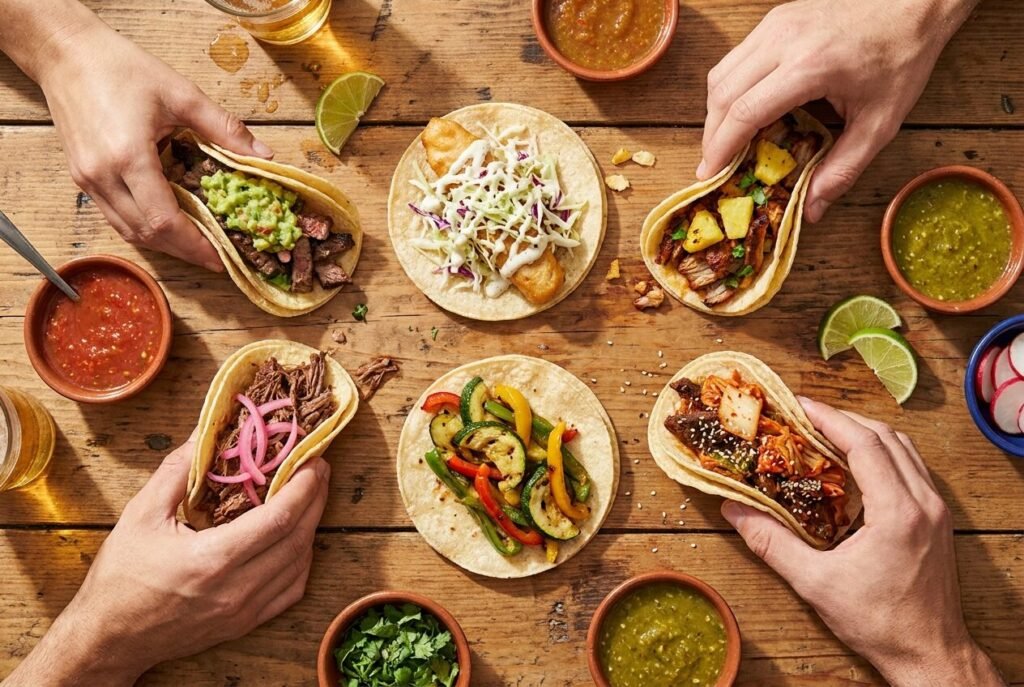
Familiar, flexible, and endlessly reinvented: that is the taco.
Gordingo’s and the Global Fusion Taco
At Gordingo’s in Brevard, North Carolina, tacos are part of a bigger idea: familiar food with bold global flavor. Located inside Ecusta Brewing, Gordingo’s serves globally inspired comfort food with Latin American favorites and flavors from around the world. That fits naturally with the history of tacos, which have always been shaped by movement, working people, street food, local ingredients, and creativity.
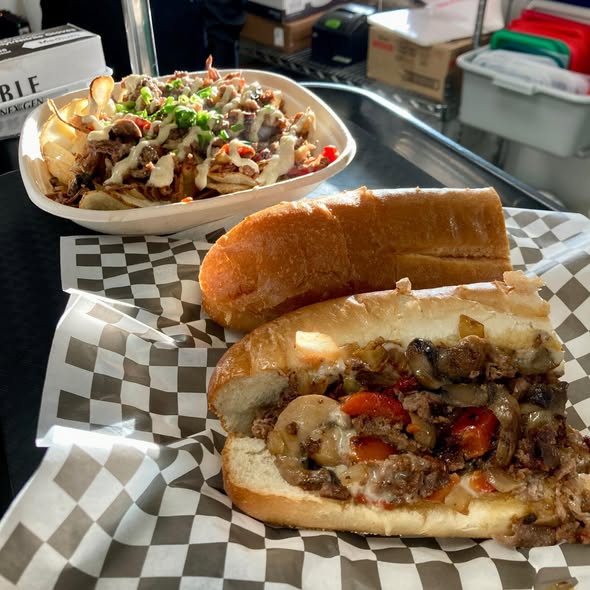
Gordingo’s does not treat tacos like they have to stay in one lane. The menu and rotating specials create room for new versions, new sauces, new toppings, and new combinations. One visit might lean into Latin inspired flavor. Another might bring in Asian inspired influence, Southern comfort, fresh seafood, bold sauces, or something completely unexpected. That is not a departure from taco culture. In many ways, it is exactly what taco culture has always done. A taco is a place where flavor travels. That same spirit carries beyond tacos too, into dishes like the chipotle cheesesteak.
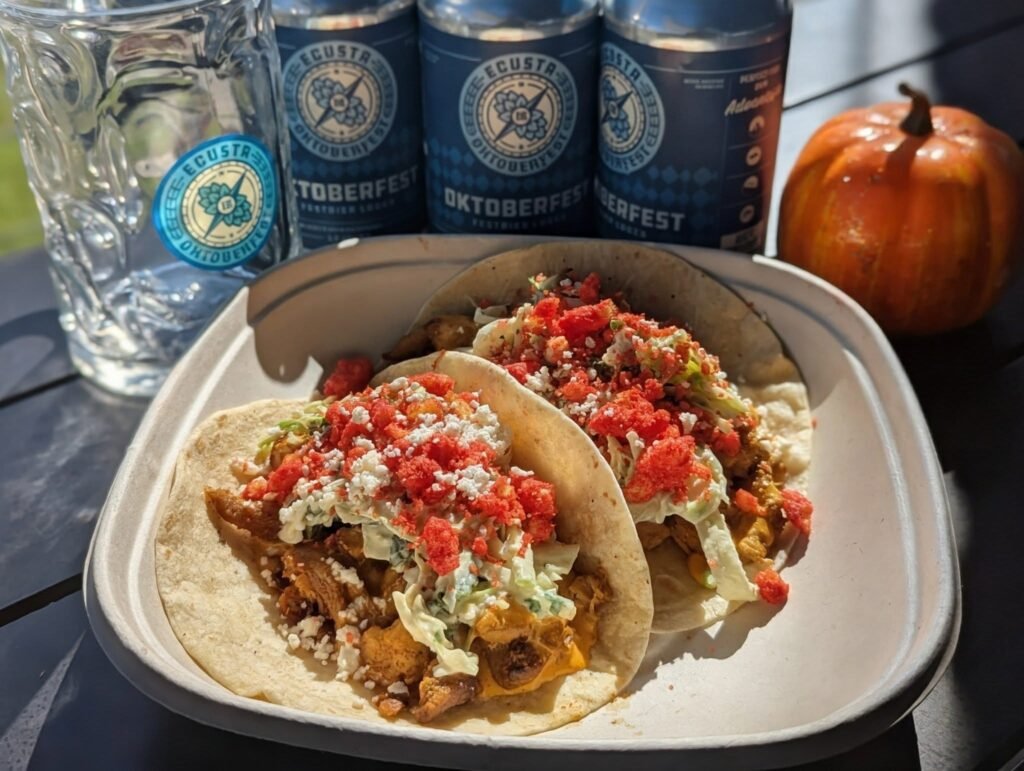
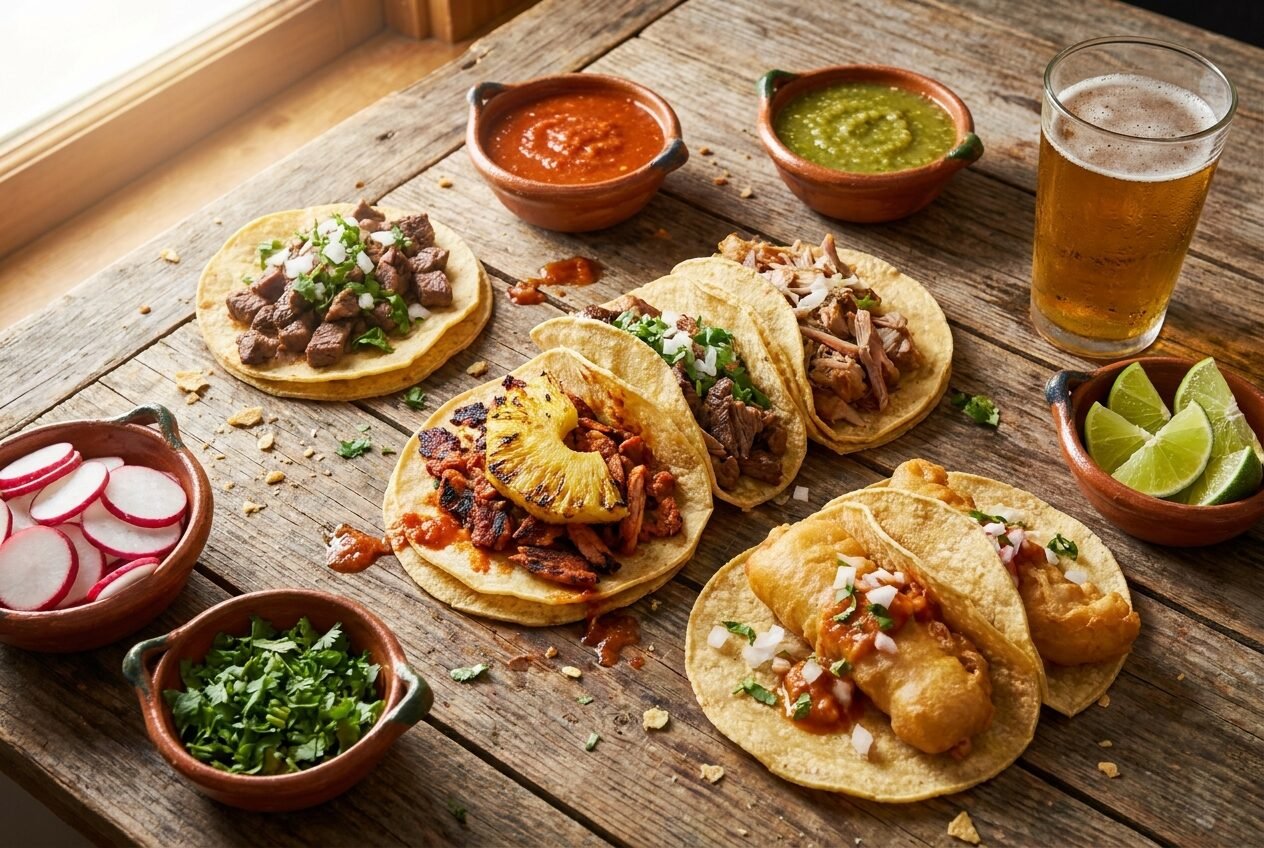
Tacos and a cold Ecusta beer, served right inside the brewery in Brevard.
Tacos in Brevard, NC
Brevard is the kind of town where a great taco makes sense. People come in after work, after a ride, after a hike, after visiting Pisgah National Forest, after a day downtown, or while meeting friends for a beer at Ecusta Brewing.
Tacos fit that rhythm. They are casual, satisfying, shareable, and easy to enjoy with a cold drink. They can be quick, but they never have to feel ordinary. That is what Gordingo’s brings to the table: bold tacos, rotating ideas, relaxed energy, and flavor that feels right at home in Brevard. It is a big part of why Brevard locals love Gordingo’s.
Come Try What’s New
The history of tacos is not frozen in the past. It is still being written by cooks, street vendors, restaurants, food trucks, families, and guests who keep asking, what else would taste good in a tortilla? From Mexican mining towns and Mexico City taquerías to Baja fish stands, Lebanese influenced al pastor, Korean BBQ tacos, and creative specials in Brevard, the taco keeps evolving. And that is why we love it.
At Gordingo’s, we celebrate that same spirit with globally inspired tacos and bold comfort food made for people who like flavor, creativity, and a little surprise. Stop by inside Ecusta Brewing in Brevard, grab a taco, and see what we are serving next.
Frequently Asked Questions About Tacos
Who invented tacos?
No single person is known as the inventor of tacos. They grew out of Mexican tortilla based food traditions, working class street food, regional cooking, and migration. The modern word and food style became more clearly documented in the 19th century, but eating tortillas with fillings goes back much further.
What are the most popular kinds of tacos?
Some of the most loved styles include carne asada, carnitas, al pastor, barbacoa, birria, Baja fish tacos, shrimp tacos, tacos de guisado, chicken tinga, vegetarian tacos, and breakfast tacos.
Are tacos only Mexican?
Tacos are Mexican in origin, but they have become global because they adapt so well. Around the world, cooks use the taco format to explore different meats, vegetables, sauces, spices, and cultural influences.
What makes a great taco?
A great taco balances the tortilla, filling, sauce, freshness, texture, acidity, and heat. The best tacos are not just stuffed. They are layered with flavor.
Where can I get creative tacos in Brevard, NC?
Gordingo’s serves tacos and globally inspired comfort food inside Ecusta Brewing in Brevard, North Carolina. The menu includes familiar favorites, bold flavors, and rotating specials that give guests something new to try.